Blog
Building scale aircraft models is far more than assembling plastic parts—it’s a meticulous craft that combines historical research, artistic technique, and technical precision. Whether you’re drawn to the challenge of replicating a weathered P-51 Mustang or capturing the pristine finish of a modern fighter jet, this hobby demands both patience and a willingness to continually refine your skills. Each completed model tells a story, and the techniques you master determine how convincingly that story comes to life.
This comprehensive resource explores the fundamental pillars of aircraft scale modeling, from building a meaningful collection to mastering advanced painting and weathering techniques. You’ll discover how to conduct proper historical research, avoid common pitfalls that compromise authenticity, and develop the artistic eye needed to transform a basic kit into a museum-quality piece. Whether you’re just beginning your journey or looking to elevate your existing skills, understanding these core concepts will provide the foundation for creating truly exceptional models.
Building a Meaningful Collection
Every modeler eventually faces the question of what to build next. A thoughtfully curated collection reflects both aesthetic coherence and personal passion, creating a display that tells a unified story rather than appearing as a random assortment of subjects.
Consider focusing your collection around specific themes: a particular era (such as Battle of Britain aircraft), a nation’s air force evolution, or specific aircraft types across different operators. This approach naturally creates visual harmony while deepening your expertise in particular historical contexts. Understanding the resale market trends can also inform smart acquisitions—certain manufacturers, subjects, and limited editions retain value better than others, though this should complement rather than dictate your collecting passion.
Storage presents practical challenges that many modelers underestimate. Aircraft with different wing configurations—swept wings, delta wings, or variable geometry—require customized solutions to prevent damage. Display cases should protect against dust and UV exposure while allowing proper air circulation. Investing in appropriate storage from the beginning prevents the heartbreak of damaged finishes and broken antennas on prized builds.
Historical Research and Authenticity
Authenticity separates a good model from an exceptional one, and it begins long before you open the kit box. Deep historical research for niche subjects often reveals fascinating details that elevate your model beyond generic representations.
Cross-Referencing Your Sources
Never rely on a single reference source. Period photographs, technical manuals, veteran accounts, and museum examples each provide different perspectives. When sources conflict—and they often do—cross-referencing multiple reliable resources helps you make informed decisions. Aviation unit histories, maintenance logs, and pilot memoirs can reveal field modifications and unique markings that official documents miss.
Interpreting Black and White Photography
One of the most challenging aspects of historical modeling involves interpreting monochrome photographs. A dark tone might represent dark green, blue, or even faded black depending on the film stock, lighting conditions, and actual paint degradation. Learning to analyze tonal values, comparing them against known color standards, and understanding how different colors photograph in black and white is a skill that develops with experience and careful study.
Decals and Insignia
Sourcing rare insignia can make or break an ambitious project. While aftermarket decal manufacturers offer impressive ranges, some markings require printing custom decals using quality inkjet or ALPS printers. Beware the “profile art” trap—illustrated side-view drawings, while helpful for general guidance, sometimes contain inaccuracies. Always verify artwork against photographic evidence when possible.
Mastering Paint and Color
Paint application represents the most visible aspect of any model, and understanding color goes far beyond simply matching a paint chip. Successfully researching and applying accurate color schemes from history requires knowledge of how paints faded, how different manufacturers interpreted standards, and how environmental conditions altered appearances.
The choice between camouflage variety and colorful liveries often reflects personal preference, but each presents unique challenges. Multi-color camouflage schemes demand careful planning for hard-edge versus soft-edge demarcations, sophisticated masking techniques, and an understanding of application patterns used by different air forces and time periods. Meanwhile, glossy finishes on colorful peacetime aircraft require flawless surface preparation and technique—every imperfection becomes visible under that unforgiving sheen.
Matching paint to historical standards involves understanding that specifications often differed from reality. A “FS 34087” designation tells you the intended color, but field conditions, available materials, and weathering meant actual aircraft rarely matched the standard perfectly. Modern modelers must decide whether to represent the theoretical standard or the practical reality documented in photographs.
Advanced Painting Techniques
Beyond basic color application, advanced techniques add depth and realism that separate workmanlike models from stunning ones.
Pre-Shading and Shadow Effects
Foundational shadowing techniques remain hotly debated in the modeling community. Some modelers swear by black or dark base coats along panel lines before applying the main color, while others argue this creates artificial contrast. The “Marble Coat” technique—applying irregular patches of lighter and darker tones before the main color—can create subtle visual complexity that mimics paint thickness variations and underlying primer variations visible on real aircraft.
Color choice for shading matters enormously. Shading a yellow aircraft with dark brown creates warm, rich shadows, while using purple creates a cooler, more dramatic effect. Understanding color theory helps you make intentional choices rather than defaulting to black, which often deadens colors rather than enhancing them.
Highlights and Panel Variation
Simulating light and shadow on flat surfaces requires understanding zenithal light—the concept that aircraft surfaces facing upward receive more light and fade differently than lower surfaces. Mixing highlight shades by adding white or lighter colors to your base coat, then carefully applying them to upper surfaces, creates this natural effect.
Panel variation involves subtly altering the tone of individual panels to represent different manufacturing batches, replacement panels, or varying paint thickness. Masking for panel variation requires patience and planning, but the risk of creating a “patchwork” look looms if you overdo the variation. The key is subtlety—variations should be just visible enough to register subconsciously rather than demanding attention.
The Art of Weathering
Weathering adds narrative depth to models through controlled aging techniques, transforming pristine plastic into realistic representations of working aircraft. However, weathering requires careful thought about what story you’re telling and which techniques serve that narrative.
Understanding Scale Effect
The scale effect represents perhaps the most important weathering concept. A real dirt streak might be an inch wide, but in 1/48 scale, that translates to barely visible. Over-scaled weathering—applying effects too heavily because they look subtle to your eye—is the most common weathering mistake. Step back frequently, photograph your work, and remember that weathering should enhance rather than dominate the overall appearance.
Fundamental Weathering Techniques
Panel line washes remain the foundation of weathering. The debate between oil versus enamel washes largely comes down to personal preference and working time—oils dry slower, allowing extended blending time, while enamels set faster for quicker progress. The “Sludge Wash” technique, using heavily thinned dark paint selectively applied to recesses and allowed to flow naturally, creates convincing grime accumulation.
Chipping paint requires understanding where wear occurs logically—walkways, access panels, and areas touched by maintenance crews show wear, while untouched surfaces remain pristine. Techniques range from the hairspray method (applying hairspray between paint layers, then removing chips with water) to sponge chipping and the silver pencil method. The risk of uniform chipping—applying wear everywhere equally—creates unrealistic results. Study reference photos to understand actual wear patterns.
Advanced Weathering Effects
Specific fluid leak textures add remarkable realism when applied correctly. Hydraulic fluid, fuel, and oil each have distinct colors and flow patterns. Applying gloss varnish before adding appropriately colored washes creates the wet appearance of fresh leaks, with directional flow guided by gravity and airflow. The risk of creating a “scale blob”—drops too large for the scale—requires using minimal product and fine brushes.
Replicating combustion residue patterns around exhausts demands understanding the complex interaction of heat, fuel type, and airflow. Modern jet exhausts show turbulence patterns with blues, browns, and blacks blending in specific ways. Pigment adhesion using fixing agents allows you to build up these effects gradually, though the risk of a “heavy hand” means patience pays dividends.
For maritime aircraft, creating a coherent narrative of salt exposure involves understanding how paint bleaches under UV light combined with salt spray, how aluminum corrodes differently than steel (affecting rust placement), and where salt residue accumulates. Walkway abrasion on carrier aircraft follows specific patterns from countless boot strikes in the same locations.
Sequencing Weathering Layers
Professional results require applying weathering in logical sequence. Start with pre-shading, apply base colors, add post-shading and highlights, then seal with a clear coat. Apply decals and seal again. Only then begin weathering, starting with subtle effects like fading and panel filters, progressing to washes and grime, and finishing with chipping and fluid leaks. Sequencing clear coats between stages allows you to correct mistakes without destroying earlier work—a critical safety net when experimenting with new techniques.
Avoiding Common Pitfalls
Experience teaches that certain mistakes appear repeatedly, even among accomplished modelers. Recognizing these traps helps you avoid frustrating setbacks.
The anachronism trap catches modelers who combine elements from different time periods on a single aircraft. That colorful unit marking might be accurate, but did it appear before or after the aircraft received that particular camouflage scheme? Cross-referencing dates ensures temporal consistency. Similarly, balancing historical grit with museum restoration standards means deciding whether you’re representing an aircraft in service or as currently displayed in a museum—two very different finishing approaches.
Logical inconsistency in weathering narratives undermines otherwise excellent work. Heavy exhaust staining suggests extensive flight hours, but pristine paintwork suggests a fresh aircraft—these elements conflict. Each weathering decision should support a coherent story about the aircraft’s service conditions, maintenance quality, and operational environment.
Color interpretation challenges arise particularly when identifying modern avionics, safety markings, and paint gloss levels from photographs. Lighting conditions, digital processing, and screen calibration all affect how you perceive colors in reference images. When possible, examine actual aircraft or trust specifications over photographic interpretation.
Building scale aircraft models rewards those who approach it as both craft and art. The techniques covered here—from thoughtful collection building through historical research to advanced painting and weathering—form an interconnected system where each skill enhances the others. As you develop your abilities, you’ll find that the joy lies not just in completed models, but in the continuous learning process itself. Every build teaches new lessons, every technique mastered opens doors to more ambitious projects, and every historical detail discovered deepens your connection to aviation history. Start with solid fundamentals, practice with purpose, and don’t fear mistakes—they’re simply steps toward mastery.
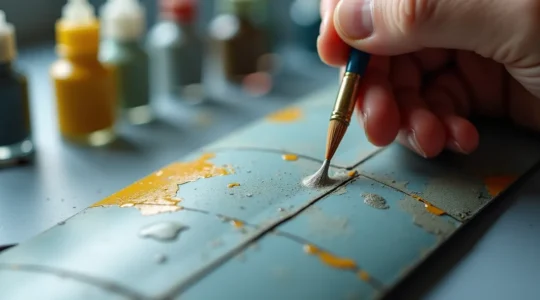
How to Control Chipping Fluid to Avoid the “Wrecked Junkyard” Look?
The secret to realistic heavy wear isn’t removing more paint, but mastering artistic control over when, where, and how every chip tells a story. Timing is everything: Chipping fluids work best within a precise “curing window” after painting, which varies…
Read more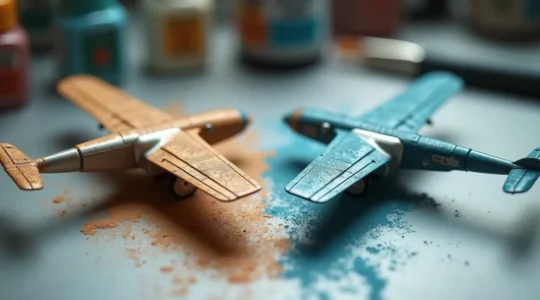
Airbrush vs. Pigments: A Specialist’s Guide to Realistic Exhaust Stains
The most realistic exhaust stains come from choosing your tool—airbrush or pigments—based on the specific chemical and physical effect you’re replicating, not just preference. Pigments excel at recreating textured, chalky deposits (like lead residue) due to their low particle cohesion….
Read more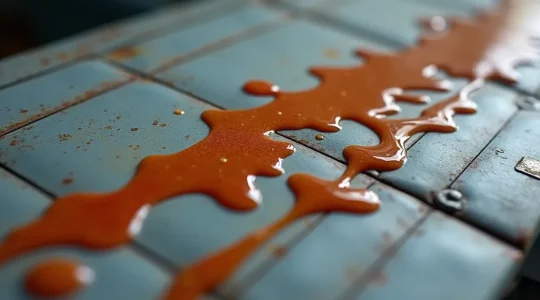
How to Create Wet Fluid Leaks That Look Fresh on a Matte Model?
The key to a convincing fluid leak isn’t just making it shiny; it’s telling a story about the aircraft’s recent history by layering texture, color, and direction based on real-world physics. Fluid appearance depends on its type (color), age (viscosity),…
Read more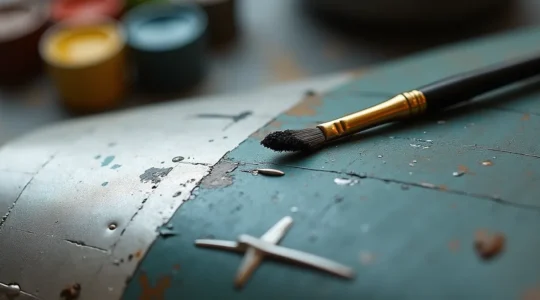
Why Oil Paint Unlocks Hyper-Realistic Grime Effects Acrylic Washes Can’t Match
The key to authentic weathering is not speed, but control; oil paints provide an extended, forgiving working window that acrylics simply cannot offer. Oils cure through slow oxidation, allowing you to blend, correct, and subtract paint for up to 48…
Read more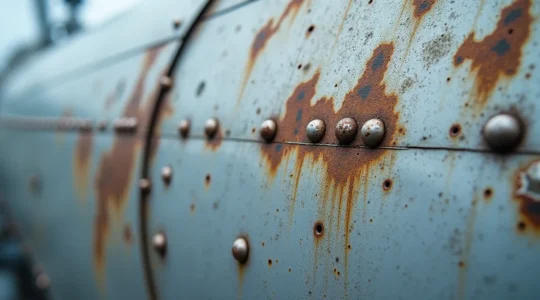
How to Weather Naval Aircraft to Simulate Saltwater Corrosion Realistically?
Most modelers approach weathering as a checklist of techniques, often resulting in an unrealistic, toy-like finish. This guide argues that authentic naval weathering isn’t about applying effects, but about telling a coherent environmental story. By understanding the science of corrosion,…
Read more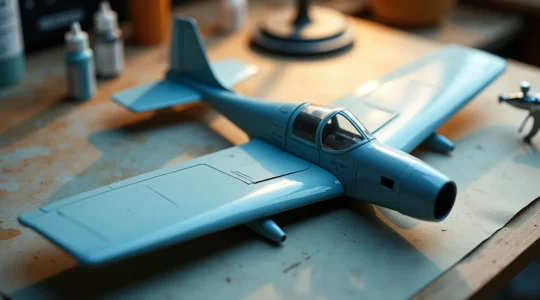
Sculpting with Light: Mastering Scale Illusion on Monochromatic Aircraft
The key to transforming a flat, monochromatic model into a convincing 3D object lies not in the colors you use, but in how you manipulate light and shadow through advanced paint application. True realism comes from understanding pigment behavior, moving…
Read more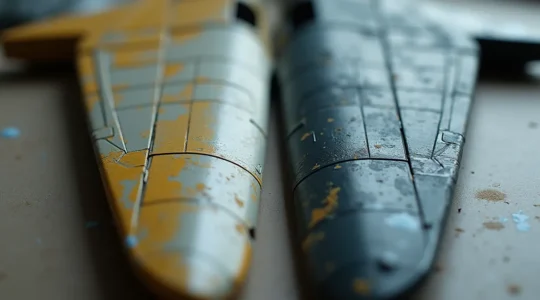
Pre-shading vs Black-basing: Which Technique Creates More Realistic Tonal Variation?
The debate between pre-shading and black-basing isn’t about which is ‘better’, but about choosing between two distinct artistic philosophies for achieving realism. Pre-shading is a structural approach, using lines to define the form and geometry of the aircraft. Black-basing is…
Read more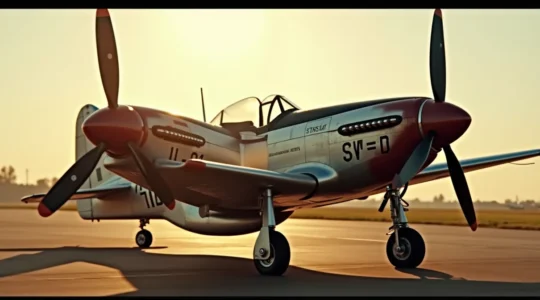
Restored Warbirds vs Wartime Photos: Which Reference Source Should You Trust?
The key to an authentic model isn’t choosing one source over the other, but understanding why they differ: restored aircraft are living history bound by modern laws, while wartime photos capture a fleeting, utilitarian reality. Restored, airworthy warbirds legally require…
Read more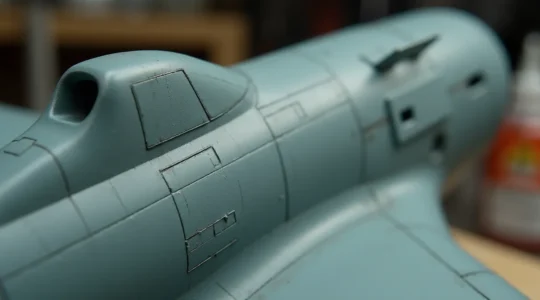
How to Build Visual Depth on Monotone Camouflage Schemes?
The secret to a realistic monotone finish isn’t adding dirt, but building a visual history through controlled, translucent layers of paint. Move beyond 100% opacity; use techniques like black-basing and marbling to create subtle, built-in tonal variation from the start….
Read more
How to Research a Specific Pilot’s Plane When Official Records Are Missing?
Achieving true historical accuracy for a specific aircraft requires abandoning the search for a single ‘truth’ and instead adopting the methodology of an archival detective. Discrepancies between official records and pilot logs are not errors to be dismissed, but clues…
Read more